

Indications
Indications.
Infections induced by microorganisms susceptible to azithromycin:
- – infections of ENT-organs (bacterial pharyngitis/tonsillitis, sinusitis, and otitis media).
- – infections of respiratory tracts (bacterial bronchitis, community-acquired pneumonia).
- – infections of skin and soft tissues: migratory erythema (initial stage of Lyme disease), erysipelas, impetigo, secondary pyodermatosis, uncomplicated forms of acne vulgaris.
- – sexually transmitted infections: uncomplicated genital infections caused by Chlamydia trachomatis.
INSTRUCTION
for medical use of the medicinal product
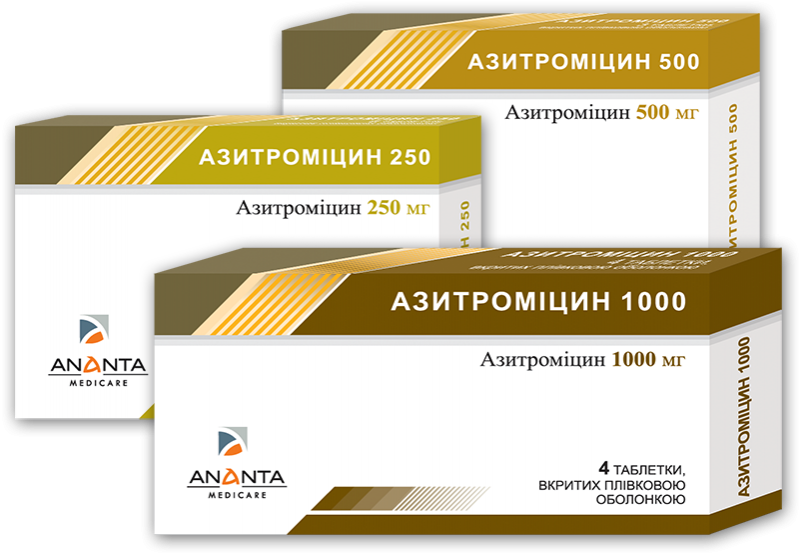
AZITHROMYCIN 250
AZITHROMYCIN 500
AZITHROMYCIN 1000
Composition:
active substance: azithromycin;
1 film-coated tablet contains azithromycin equivalent to 250 mg, 500 mg or 1000 mg azithromycin anhydrous;
excipients:
Azithromycin 250: microcrystalline cellulose, calcium hydrophosphate, maize starch, povidone, magnesium stearate, talcum, silicon dioxide colloidal anhydrous, sodium lauryl sulfate, sodium starch glycolate (type А);
tablet coating: hydroxypropylmethylcellulose, titanium dioxide (E 171), iron oxide yellow (Е 172);
Azithromycin 500: microcrystalline cellulose, maize starch, povidone, magnesium stearate, talcum, silicon dioxide colloidal anhydrous, sodium lauryl sulfate, sodium starch glycolate (type А);
tablet coating: hydroxypropylmethylcellulose, titanium dioxide (E 171), iron oxide yellow (Е 172);
Azithromycin 1000: calcium hydrophosphate, maize starch, povidone, microcrystalline cellulose, magnesium stearate, talcum, silicon dioxide colloidal anhydrous, sodium starch glycolate (type А);
tablet coating: hydroxypropylmethylcellulose, polyethyleneglycol 6000, titanium dioxide (E 171), talcum, iron oxide yellow (Е 172).
Dosage form. Film-coated tablets.
Basic physical and chemical properties
250 mg tablets: yellow, round, film-coated biconvex tablets;
500 mg tablets: yellow, oblong shaped, film-coated biconvex tablets, with the score-line on the one side and smooth on the other side;
1000 mg tablets: yellow, oblong shaped, film-coated biconvex tablets, with the score-line on the one side and smooth on the other side.
Pharmacotherapeutic group. Antibacterials for systemic use. Macrolides, lincosamides and streptogramines. Azithromycin. ATC code J01F A10.
Pharmacological properties.
Pharmacodynamics.
Azithromycin is a macrolide antibiotic belonging to the azalide group that has a broad spectrum of antimicrobial activity. The molecule is constructed by adding a nitrogen atom to the lactone ring of erythromycin A. The mechanism of action of azithromycin is to inhibit the synthesis of bacterial protein by binding to 50S ribosomal sub-unit and to prevent translocation of peptides.
Mechanism of resistance
Complete cross resistance exists among Streptococcus pneumoniae, betahaemolytic streptococcus of group A, Enterococcus faecalis and Staphylococcus aureus, including methicillin resistant S. aureus (MRSA) to erythromycin, azithromycin, other macrolides and lincosamides.
The prevalence of acquired resistance may vary geographically and with time for selected species and local information of resistance is desirable, particularly when treating severe infections. As necessary, expert advice should be sought where the local prevalence of resistance is such that utility of the agent in at least some types of infections is questionable.
Spectrum of antimicrobial activity of azithromycin.
| Commonly susceptible species |
| Aerobic gram-positive bacteria |
| Staphylococcus aureus (methicillin susceptible) |
| Streptococcus pneumoniaе (penicillin susceptible) |
| Streptococcus рyogenes |
| Aerobic gram-negative bacteria |
| Haemophilus influenzaе |
| Haemophilus parainfluenzae |
| Legionella pneumophila |
| Moraxella catarrhalis |
| Pasteurella multocida |
| Anaerobic bacteria |
| Сlostridium perfringens |
| Fusobacterium spp. |
| Prevotella spp. |
| Porphyromonas spp. |
| Other bacteria |
| Chlamydia trachomatis |
| Chlamydia pneumoniae |
| Mycoplasma pneumoniae |
| Species acquired resistance in rare cases |
| Aerobic gram-positive bacteria |
| Streptococcus pneumoniae with intermediate susceptibility to penicillin and penicillin-resistant |
| Inherently resistant organisms |
| Aerobic gram-positive bacteria |
| Enterococcus faecalis |
| Staphylococci МRSA, MRSE* |
| Anaerobic bacteria |
| Bacteroides fragilis-group |
* Methycillin-resistant staphylococci have a very high prevalence of acquired resistance to macrolides and have been placed here because they are rarely susceptible to azithromycin.
Pharmacokinetics.
Bioavailability of azithromycin after oral administration is approximately 37%. Peak plasma concentrations are attained in 2-3 hours after administration. Orally administered azithromycin is widely distributed throughout the body. Pharmacokinetic studies have demonstrated that the concentrations of azithromycin measured in tissues are noticeably higher (up to 50 times) than those measured in plasma. This indicates that the agent strongly binds to tissues.
Binding of azithromycin to serum proteins is variable and varies from 12% at 0.5 μg/mL to 52% at 0,05 μg/mL, depending on the serum concentration. The apparent volume of distribution in the equilibrium state (VVss) is 31.1 L/kg.
The terminal plasma elimination half-life completely reflects the elimination half-life from tissues within 2-4 days.
Approximately 12% of an intravenously administered dose is excreted in unchanged form with the urine over a period of 3 days. Especially high concentrations of unchanged azithromycin have been found in human bile. In addition, 10 metabolites formed by N- and O-demethylation, by hydroxylation of the desosamine and aglycone rings, and by splitting of the cladinose conjugate, have been identified. Comparison of the results of liquid chromatography and microbiological analyzes has shown that the metabolites of azithromycin are not microbiologically active.
Clinical characteristics.
Indications.
Infections induced by microorganisms susceptible to azithromycin:
- – infections of ENT-organs (bacterial pharyngitis/tonsillitis, sinusitis, and otitis media).
- – infections of respiratory tracts (bacterial bronchitis, community-acquired pneumonia).
- – infections of skin and soft tissues: migratory erythema (initial stage of Lyme disease), erysipelas, impetigo, secondary pyodermatosis, uncomplicated forms of acne vulgaris.
- – sexually transmitted infections: uncomplicated genital infections caused by Chlamydia trachomatis.
Contraindications.
Hypersensitivity to azithromycin, erythromycin or other macrolide and ketolide antibiotics, and excipients of the medicinal product.
Interaction with other medicinal preparations and other forms of interaction.
Antacids: In a pharmacokinetic study investigating the effects of simultaneous administration of antacids with azithromycin, no effect on overall bioavailability was seen, although peak serum concentrations were reduced by approximately 25%. In patients receiving both azithromycin and antacids, the drugs should not be taken simultaneously.
Cetirizine: In healthy volunteers, co-administration of a 5-day regimen of azithromycin with 20 mg cetirizine at steady-state resulted in no pharmacokinetic interaction and no significant changes in the QT interval.
Didanosine: Co-administration of 1200 mg/day azithromycin with 400 mg/day didanosine in 6 HIV-positive subjects did not appear to affect the steady-state pharmacokinetics of didanosine as compared with placebo.
Digoxin and colchicine: The co-administration of macrolide antibiotics, including azithromycin, with P-glycoprotein substrates, such as digoxin and colchicine, has been reported to result in increased serum levels of the P-glycoprotein substrate. Therefore, if azithromycin and P-glycoprotein substrates, such as digoxin, are co-administered, the possibility of elevated serum digoxin concentrations should be considered.
Zidovudine: Single 1000 mg doses and multiple 1200 mg or 600 mg doses of azithromycin had a little effect on the plasma pharmacokinetics or urinary excretion of zidovudine or its glucuronide metabolite. However, administration of azithromycin increased the concentrations of phosphorylated zidovudine, the clinically active metabolite, in peripheral blood mononuclear cells. The clinical significance of this finding is unclear, but it may be of benefit to patients.
Azithromycin does not interact significantly with the hepatic cytochrome P450 system. It is not believed to undergo the pharmacokinetic drug interactions as seen with erythromycin and other macrolides. Hepatic cytochrome P450 induction or inactivation via cytochrome-metabolite complex does not occur with azithromycin.
Ergot derivatives: Due to the theoretical possibility of ergotism, the concurrent use of azithromycin with ergot derivatives is not recommended.
Pharmacokinetic studies have been conducted between azithromycin and the following drugs known to undergo significant cytochrome P450 mediated metabolism.
Atorvastatin: The co-administration of atorvastatin (10 mg/day) and azithromycin (500 mg/day) did not alter atorvastatin concentrations in plasma (based on HMG CoA-reductase inhibition assay). However, some postregistry cases of rhabdomyolysis have been reported in patients receiving azithromycin along with statins.
Carbamazepine: In a pharmacokinetic interaction study in healthy volunteers, no significant effect was observed on the plasma levels of carbamazepine or its active metabolite in patients receiving concomitant azithromycin.
Cimetidine: In a pharmacokinetic study investigating the effects of a single dose of cimetidine, given 2 hours before azithromycin, on the pharmacokinetics of azithromycin, no alteration of azithromycin pharmacokinetics was seen.
Coumarin anticoagulants: In a pharmacokinetic interaction study, azithromycin did not alter the anticoagulant effect of a single dose of 15 mg warfarin administered to healthy volunteers. There have been reports received in the post-marketing period of potentiated anticoagulation subsequent to coadministration of azithromycin and coumarin-type oral anticoagulants. Although a causal relationship has not been established, consideration should be given to the frequency of monitoring prothrombin time when azithromycin is used in patients receiving coumarin-type oral anticoagulants.
Ciclosporin: In a pharmacokinetic study with healthy volunteers that were administered a 500 mg/day oral dose of azithromycin for 3 days and were then administered a single 10 mg/kg oral dose of ciclosporin, the resulting ciclosporin Cmax and AUC0-5 were found to be significantly elevated.
Efavirenz: The co-administration of a single dose o f a single dose of 600 mg azithromycin and 400 mg efavirenz daily for 7 days did not result in any clinically significant pharmacokinetic interactions.
Fluconazole: The co-administration of a single dose of 1200 mg azithromycin did not alter the pharmacokinetics of a single dose of 800 mg fluconazole. Total exposure and half-life of azithromycin were unchanged by the co-administration of fluconazole, however, a clinically insignificant decrease in Cmax (18%) of azithromycin was observed.
Indinavir: The co-administration of a single dose of 1200 mg azithromycin had no statistically significant effect on the pharmacokinetics of indinavir administered as 800 mg three times daily for 5 days.
Methylprednisolone: In a pharmacokinetic interaction study in healthy volunteers, azithromycin had no significant effect on the pharmacokinetics of methylprednisolone.
Midazolam: In healthy volunteers, co-administration of azithromycin 500 mg/day for 3 days did not cause clinically significant changes in the pharmacokinetics and pharmacodynamics of a single 15 mg dose of midazolam.
Nelfinavir: Co-administration of azithromycin (1200 mg) and nelfinavir at steady state (750 mg three times daily) resulted in increased azithromycin concentrations. No clinically significant adverse effects were observed and no dose adjustment is required.
Rifabutin: The co-administration of azithromycin and rifabutin did not affect the serum concentrations of either drug. Neutropenia was observed in subjects receiving concomitant treatment of azithromycin and rifabutin. Although neutropenia has been associated with the use of rifabutin, a causal relationship to combination with azithromycin has not been established.
Sildenafil: In normal healthy male volunteers, there was no evidence of an effect of azithromycin (500 mg daily for 3days) on the AUC and Cmax of sildenafil or its major circulating metabolite.
Terfenadine: Pharmacokinetic studies have reported no evidence of an interaction between azithromycin and terfenadine. There have been rare cases reported where the possibility of such an interaction could not be entirely excluded; however there was no specific evidence that such an interaction had occurred.
Theophylline: There is no evidence of a clinically significant pharmacokinetic interaction when azithromycin and theophylline are co-administered to healthy volunteers.
Triazolam: The co-administration of azithromycin 500 mg on Day 1 and 250 mg on Day 2 with 0.125 mg triazolam on Day 2 had no significant effect on any of the pharmacokinetic variables for triazolam compared to triazolam and placebo.
Trimethoprim/sulfamethoxazole: The co-administration of trimethoprim/sulfamethoxazole DS (160 mg/800 mg) for 7 days with azithromycin 1200 mg on Day 7 had no significant effect on peak concentrations, total exposure or urinary excretion of either trimethoprim or sulfamethoxazole. Azithromycin serum concentrations were similar to those seen in other studies.
Medicinal products that may prolong the QT interval. Caution should be exercised when prescribing azithromycin to patients with other medicinal products that may prolong the QT interval.
Precautions for use.
Hypersensitivity.
As with erythromycin and other macrolides, rare serious allergic reactions including angioneurotic oedema and anaphylaxis (rarely fatal), dermatological reactions, including Stevens-Johnson syndrome, toxic epidermal necrolysis (rarely fatal) and medical eruptions with symptoms of eosinophilia and systemic symptoms (DRESS-syndrom) (see Adverse reactions), have been reported. Some of these reactions with azithromycin have resulted in recurrent symptoms and required a longer period of observation and treatment.
If allergic reactions occur, the use of the medicinal product should be discontinued and appropriate therapy should be initiated. The doctor should know that symptoms of allergy might occur again after stopping symptomatic treatment.
Hepatic impairment.
Since the liver is the principal route of elimination for azithromycin, the use of azithromycin should be undertaken with caution in patients with significant hepatic disease. Cases of fulminant hepatitis potentially leading to life-threatening liver failure have been reported with azithromycin. Some patients may have had pre-existing hepatic disease or may have been taking other hepatotoxic medicinal products.
In case of signs and symptoms of liver dysfunction, such as rapid developing asthenia associated with jaundice, dark urine, bleeding tendency or hepatic encephalopathy, liver function tests/ investigations should be performed immediately.
Azithromycin administration should be stopped if liver dysfunction has emerged.
Ergot derivatives.
In patients receiving ergot derivatives, ergotism has been precipitated by co-administration of some macrolide antibiotics. There are no data concerning the possibility of an interaction between ergotamine derivatives and azithromycin. However, because of the theoretical possibility of ergotism, azithromycin and ergot derivatives should not be co-administered.
Superinfections.
As with any antibiotic preparation, there is a possibility of superinfection development (for example, mycosis).
Clostridium difficile associated diarrhoea (CDAD) has been reported with use of nearly all antibacterial agents, including azithromycin, and may range in severity from mild diarrhoea to fatal colitis. Treatment with antibacterial agents alters the normal flora of the colon leading to overgrowth of C. difficile.
- difficile produces toxins A and B which contribute to the development of CDAD. Hypertoxin producing strains of C.difficile cause increased morbidity and mortality, as these infections can be resistant to antimicrobial therapy and may require colectomy. CDAD must be considered in all patients who present with diarrhoea following antibiotic use. Careful medical history is necessary since CDAD has been reported to occur over two months after the administration of antibacterial agents.
Renal impairment.
In patients with severe renal impairment (glomerular filtration rate < 10 mL/min) a 33% increase in systemic exposure to azithromycin was observed
QT prolongation.
Prolonged cardiac repolarisation and QT interval, imparting a risk of developing cardiac arrhythmia and torsades de pointes, have been seen in treatment with other macrolides, including azithromycin. Since conditions accompanied by an increased risk of ventricular arrhythmias (including torsade de pointes) may lead to cardiac arrest, azithromycin should be used with caution in patients with ongoing proarrhythmic conditions (especially women and elderly patients), in particular to patients with:
- – congenital or documented acquired QT prolongation.
- – currently receiving treatment with other active substances known to prolong QT interval such as antiarrhythmics of Class IA (quinidine and procainamide) and Class III (dofetilide, amiodarone and sotalol), cisapride and terfenadine; antipsychotic agents such as pimozide; antidepressants such as citalopram; fluoroquinolones such as moxifloxacin and levofloxacin.
- – electrolyte disturbance, particularly in cases of hypokalaemia and hypomagnesaemia
- – clinically relevant bradycardia, cardiac arrhythmia or severe cardiac insufficiency.
Myasthenia gravis.
Exacerbations of the symptoms of myasthenia gravis and new onset of myasthenia syndrome have been reported in patients receiving azithromycin therapy.
Streptococcic infections.
Azithromycin is in general effective against streptococcus in the oropharynx, but no data are available that demonstrate the efficacy of azithromycin in preventing acute rheumatoid polyarthritis.
Safety and efficacy for the prevention or treatment of Mycobacterium Avium Complex in children have not been established.
Pregnancy and lactation.
Pregnancy.
There are no adequate data on the use of azithromycin in pregnant women. Reproductive toxicity studies in animals have shown no teratogenic effects of azithromycin on the foetus, but the drug has penetrated the placenta. The safety of azithromycin during pregnancy has not been established. Therefore, azithromycin should be used during pregnancy only if the benefit overcomes the risk.
Breastfeeding.
Azithromycin has been reported to be secreted into human breast milk, but there are no adequate and well controlled clinical studies in nursing women that have characterized the pharmacokinetics of azithromycin excretion into human breast milk. Azithromycin may be used during breastfeeding only if the expected benefit to the mother overcomes the potential risk to the infant.
Fertility.
In fertility studies in rat, the pregnancy rates were reduced following administration of azithromycin. The relevance of these findings to humans is unknown.
Effects on ability to drive and use machines.
No data are available regarding the influence of azithromycin on a patient’s ability to drive or operate machinery.
However, the possibility of undesirable effects, such as delirium, hallucinations, dizziness, drowsiness, fainting, convulsions, which may affect the ability to drive or use machines should be considered.
Method of administration and dosage.
The drug should be given as a single daily dose regardless of food intake. In case of missing 1 dose of the drug, the dose should be taken as early as possible, and the next one – at intervals of 24 hours. The tablets should be swallowed without chewing.
Adults and children with a body weigh ≥45 kg.
In case of infections of ENT-organs, respiratory tracts, skin and soft tissues (except migratory erythema): the total dose is 1500 mg (500 mg once a day). Duration of the treatment is 3 days.
In case of acne vulgaris: the recommended total dose is 6 g. The recommended scheme of treatment is as follows: for first 3 days – 500 mg once a day, and for the following 9 weeks – 500 mg once a week. In the second week the tablet is taken in 7 days after the previous intake, and the next 8 doses should be taken at intervals of 7 days.
In case of migratory erythema: the total dose of azithromycin is 3 g. The scheme of treatment is as follows: 1 g on the first day, then 500 mg once a day from the 2nd to the 5th day.
In case of sexually transmitted infections: the recommended dose of azithromycin is 1 g as a single dose; course dose is 1 g.
Elderly patients.
There is no need to adjust the dosage for elderly patients.
Since elderly patients may be at risk for electrical cardiac conduction disorders, the caution is recommended due to the risk of developing cardiac arrhythmia and torsades de pointes when azithromycin is used.
Patients with renal impairment.
The same dosage can be used for both patients with normal renal function and patients with mild renal impairment (glomerular filtration rate is 10-80 mL/min). Azithromycin should be used with caution to patients with severe renal impairment (glomerular filtration rate <10 mL/min).
Patients with hepatic impairment.
Since azithromycin is metabolized in the liver and excreted with bile, the preparation should not be used in patients with severe liver diseases. There were no studies related to the treatment of such patients with azithromycin.
Children.
The medicinal product is for children with a body weight ≥ 45 kg. Azithromycin should be prescribed in another dosage form, such as a suspension, for children with a body weight ≤ 45 kg.
Overdose.
The clinical experience of azithromycin application proves that adverse events experienced in higher than recommended doses were similar to those seen in normal doses. Typical overdose symptoms may be reversible hearing impairment, nausea, vomiting and diarrhea.
In case of overdose, if necessary, it is recommended to take activated charcoal and conduct general symptomatic and supportive treatment.
Adverse reactions.
The frequency grouping is defined using the following convention: very common (≥1/10); common (≥ 1/100 to <1/10); uncommon (≥1/1,000 to <1/100); rare (≥ 1/10,000 to <1/1,000); very rare (< 1/10,000); and not known (cannot be estimated from the available data). Within each frequency grouping, undesirable effects are presented in order of decreasing seriousness.
| System Organ Class | Adverse reactions | Frequency |
| Infections and infections | Candidiasis, vaginal infections, pneumonia, fungal infection, bacterial infection, pharyngitis, gastroenteritis, respiratory disorders, rhinitis, oral candidiasis | Uncommon |
| Pseudomembranous colitis | Not known | |
| Blood and lymphatic system disorders | Leukopenia, neutropenia, eosinophilia | Uncommon |
| Thrombocytopenia, hemolytic anemia | Not known | |
| Immune system disorders | Angioedema, hypersensitivity reactions | Uncommon |
| Anaphylactic reaction | Not known | |
| Metabolism disorders | Anorexia | Uncommon |
| Psychic disorders | Nervousness, insomnia | Uncommon |
| Agitation | Rare | |
| Aggression, anxiety, delirium, hallucinations | Not known | |
| Nervous system disorders | Headache | Common |
| Dizziness, drowsiness, dysgeusia, paresthesia | Uncommon | |
| Fainting, convulsions, hypoaesthesia, psychomotor hypersensitivity, anosmia, ageusia, parosmia, myasthenia gravis | Not known | |
| Eye disorders | Visual impairment | Uncommon |
| Ear disorders | Hearing impaired, vertigo | Uncommon |
| Hearing impaired, including deafness and/or tinnitus | Not known | |
| Cardiac disorders | Palpitation | Uncommon |
| Ventricular fibrillation (torsade de pointes), arrhythmia, including ventricular tachycardia, QT prolongation on ECG | Not known | |
| Vascular disorders | Hot flush | Uncommon |
| Arterial hypotension | Not known | |
| Respiratory disorders | Dyspnea, epistaxis | Uncommon |
| Gastrointestinal disorders | Diarrhea | Very common |
| Vomiting, abdominal pain, nausea | Common | |
| Constipation, flatulence, dyspepsia, gastritis, dysphagia, bloating, dry mouth, eructation, mouth ulcers, salivary hypersecretion | Uncommon | |
| Pancreatitis, tongue colour changed | Not known | |
| Hepatobiliary disorders | Hepatitis and cholestatic jaundice | Rare |
| Hepatic failure (which has rarely resulted in death), hepatitis fulminant, hepatic necrosis | Not known | |
| Skin and subcutaneous tissue disorders | Rash, itching, urticaria, dermatitis, dry skin and hyperhidrosis | Uncommon |
| Photosensitivity, acute generalized exanthematous pustulosis | Rare | |
| Stevens-Johnson syndrome, toxic epidermal necrolysis, polymorphic erythema, drug response with eosinophilia and systemic symptoms | Not known | |
| Musculoskeletal and connective tissue disorders | Osteoarthritis, myalgia, back pain, neck pain | Uncommon |
| Arthralgia | Not known | |
| Renal and urinary disorders | Dysuria, renal pain | Uncommon |
| Acute renal failure, interstitial nephritis | Not known | |
| Reproductive system and breast disorders | Metrorrhagia, testicular disorders | Uncommon |
| General disorders and administration site conditions | Swelling, asthenia, malaise, fatigue, facial edema, chest pain, hyperthermia, pain, peripheral edema | Uncommon |
| Investigations | Decreased lymphocytes, increased eosinophils, decreased blood bicarbonate, increased basophils, increased monocytes, increased neutrophils | Common |
| Increased aspartate aminotransferase, increased alanine aminotransferase, increased blood bilirubin concentrations, increased blood urea concentrations, increased blood creatinine concentrations, changes in blood potassium concentrations, increased alkaline phosphatase levels, increased chloride levels, increased glucose concentrations, increased platelet levels, decreased hematocrit levels, increased bicarbonate levels, deviation of sodium level | Uncommon | |
| Injury and poisoning | Postoperative complications | Uncommon |
Information on adverse reactions, possibly related to the prevention and treatment with Mycobacterium Avium Complex, is based on clinical studies and observations in the post-marketing period. These adverse reactions differ in type from those reported with the use of high-dosage forms and long-acting medicinal forms.
Adverse reactions, possibly related to the prevention and treatment with Mycobacterium Avium Complex
| System Organ Class | Adverse reactions | Frequency |
| Metabolism disorders | Anorexia | Common |
| Nervous system disorders | Dizziness, headache, paresthesia, dysgeusia | Common |
| Hypesthesia | Uncommon | |
| Eye disorders | Visual impairment | Common |
| Ear disorders | Deafness | Common |
| Hearing impaired, tinnitus | Uncommon | |
| Cardiac disorders | Palpation | Uncommon |
| Gastrointestinal disorders | Diarrhea, abdominal pain, nausea, flatulence, gastrointestinal discomfort, loose stool | Very common |
| Hepatobiliary disorders | Hepatitis | Uncommon |
| Skin and subcutaneous tissue disorders | Rash, itching | Common |
| Stevens-Johnson syndrome, photosensitivity | Uncommon | |
| Musculoskeletal and connective tissues disorders | Arthralgia | Common |
| General disorders and administration site conditions | Increased fatigue | Common |
| Asthenia, malaise | Uncommon |
Reporting suspected adverse reactions.
Reporting suspected adverse reactions after authorization of the medicinal product is important. It allows continued monitoring of the benefit/risk balance of the medicinal product. Healthcare professionals are asked to report any suspected adverse reactions.
Shelf-life.
2 years.
Storage conditions.
Store in the original package at a temperature not exceeding 30 °C. Keep out of reach of children.
Packaging.
Azithromycin 250: 6 tablets in a blister, 1 blister in a carton.
Azithromycin 500: 3 tablets in a blister, 1 blister in a carton.
Azithromycin 1000: 4 tablets in a blister, 1 blister in a carton.
Terms of dispensing. On prescription.
Date of last update. 11.01.2022